Understanding Network Automation: A Beginner's Guide
July 30, 2025 • Network Automation
A simple introduction to network automation, APIs, YANG models, Python tools, and model-driven management using NETCONF and RESTCONF.
Introduction
Networks today have become too large and too complex to manage by typing long commands into every device one by one. In the past, an engineer could log in to a router, change a few settings, and be done. But modern networks have hundreds or even thousands of devices, spread across data centers, cloud environments, and branch offices. Managing all of this manually is slow, stressful, and often leads to mistakes.
This is where network automation comes in. Network automation is the process of using scripts, tools, and APIs to configure, monitor, and manage network devices automatically. Instead of repeating the same tasks on every device, automation lets you define what you want and allow the system to push those changes for you quickly and consistently.
Automation is not about replacing engineers. Its about removing repetitive work and helping teams focus on design, troubleshooting, security, and performance. It reduces errors, speeds up deployments, and makes networks more reliable. Whether you are a beginner or already familiar with Linux and CLI, learning automation is now a must have skill for the future of networking.
Why automation
With a small number of Network Elements (NEs), an operator can manage them by making direct terminal connections.
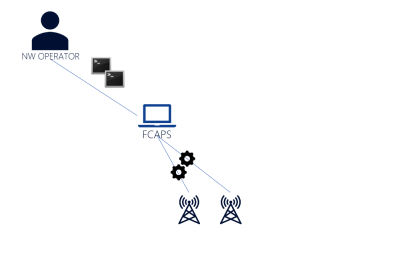
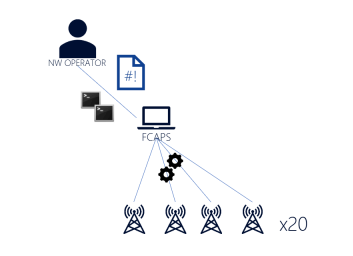
But as the number of NEs grows, manual management becomes difficult, and some level of automation becomes necessary even simple custom scripts.
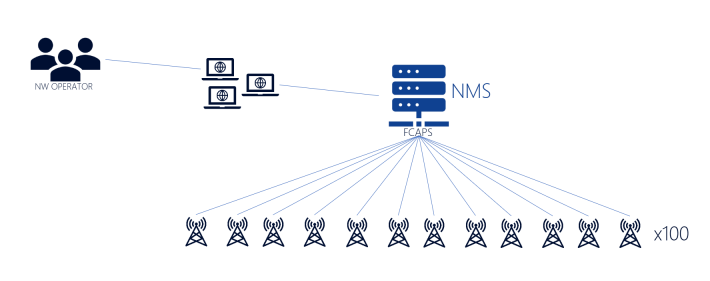
Network Management
- For large and complex networks, it is impossible to manage everything manually.
- A Network Management System (NMS) is required to simplify FCAPS (Fault, Configuration, Accounting, Performance, and Security) tasks.
Modern networks are growing quickly with cloud, hybrid setups, SDN, and API-based devices, making manual management harder. As companies add more routers, switches, and cloud services, the chances of human error also increase. Network automation reduces these mistakes and saves time by handling repetitive tasks, allowing engineers to focus on troubleshooting, improving network design, and strengthening security.
Key Concepts in Network Automation
Network automation is built on a few important concepts:
1. APIs (NETCONF, RESTCONF, gNMI)
APIs allow us to communicate with network devices in a clean, structured way. Instead of logging in with SSH and scraping CLI output, APIs return data in machine-readable formats. This makes automation faster, safer, and more reliable.
2. YANG Models
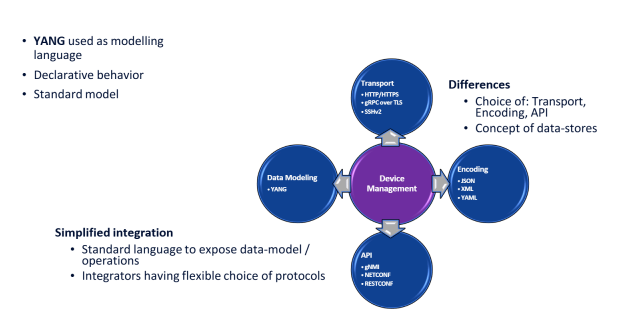
YANG is a standard modeling language that defines how network configuration data is structured. It acts like a blueprint, describing what values exist, how they relate, and what can be changed. Because devices follow the same model, automation tools can work more consistently across different vendors.
3. Configuration Templates
Templates (often written in YAML or Jinja) help generate device configurations quickly. Instead of writing the same commands repeatedly, you create one template and fill in variables. This saves a lot of time in large networks.
4. Python & Automation Tools
Python is the main language used in network automation because it is simple and has many useful libraries. Tools like Paramiko, Netmiko, NAPALM, ncclient, and the requests library make it easy to automate SSH, APIs, NETCONF, RESTCONF, and more with just a few lines of code.
Below is a brief overview of libraries that can be used
Note: I will demonstrate their usage in upcoming posts.
Python Libraries
- Netmiko
- Paramiko
- NAPALM
- ncclient (for NETCONF)
Network Automation Platforms
- Ansible
- Cisco NSO
- SaltStack
- Terraform (for network infrastructure)
- Cisco DNA Center / Juniper Contrail (for SDN)
Model-Driven Automation
Modern networks are moving away from typing long CLI commands and are instead using APIs to configure devices. NETCONF and RESTCONF are two common methods that make this possible.
NETCONF uses XML and provides a structured, reliable way to read and change device settings. RESTCONF works over HTTPS and returns data in JSON or XML, making it easy to use with Python scripts or web tools.
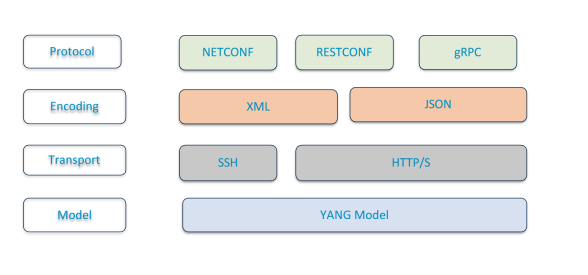
These protocols give machines a clean and consistent way to communicate with network devices. Instead of screen-scraping CLI output, you get properly formatted data that is easy to automate.
Much of this is made possible by YANG, the modeling language that defines how configuration data is organized. YANG acts like a blueprint showing devices and applications what settings exist, their types, and how they should be presented. This standardization (including OpenConfig models) allows automation tools to work smoothly across different vendors.
Now you might be wondering how to start learning Network Automation. There are many good resources online; here are a few to get started:
David Bombal Free Courses
Introduction to Network Automation – David Bombal Video
DevNet Resources
- DevNet Home Page
- Network Programmability Basics (NETCONF, RESTCONF, YANG)
- Learning Labs on NETCONF, RESTCONF, and YANG
- NETCONF/RESTCONF/YANG Information
- Coding Fundamentals Learning Module
- Network Programmability Basics Video Course
GNS3 Playlist
GNS3 Network Automation Playlist